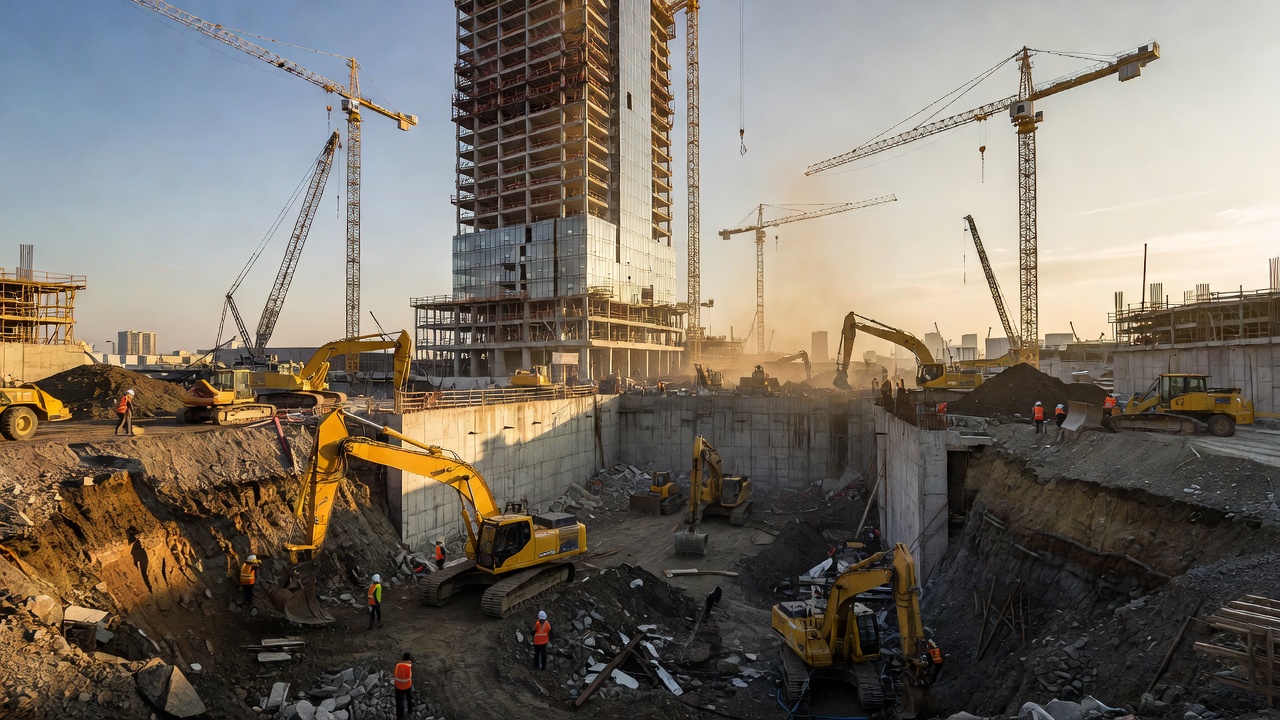
Malta's unique geography is defined by its solid bedrock of globigerina and coralline limestone. As development density increases, contractors are forced to build downward to accommodate mandatory underground parking facilities. However, deep excavation in densely packed residential zones has led to a series of high-profile structural failures in neighboring properties over recent years.
In response, the Occupational Health and Safety Authority (OHSA), in tandem with the Building and Construction Authority (BCA), has rolled out strict new compliance protocols for 2026. If you are breaking ground this year, here is what you need to know to avoid heavy fines and site closures.
1. Mandatory Pre-Condition Condition Reports (PCR)
The days of merely conducting a visual check of the boundary wall are over. Before any heavy machinery arrives on site, developers are now required to commission a comprehensive Pre-Condition Report for all contiguous properties.
- Photographic Evidence: High-resolution timestamped photos of all existing cracks and structural anomalies in neighboring buildings must be filed with the BCA.
- Geotechnical Assessment: A warranted architect or geologist must certify that the underlying rock strata can sustain the proposed rock cutting without triggering fault lines that extend under adjacent foundations.
"Excavation safety does not start when the trencher is turned on; it begins months prior during the geological survey phase. Understanding the rock you are cutting is as important as the machinery you use to cut it."
2. Real-Time Vibration Monitoring
Under the 2026 framework, relying on human perception for vibration limits is illegal. Contractors must install calibrated seismic monitors on the party walls of all adjoining structures.
These monitors must be connected to a telemetry system that sends real-time data to the Site Safety Officer (SSO). If vibrations exceed the newly established threshold of 5mm/s Peak Particle Velocity (PPV) for sensitive structures, the system must trigger an automatic, immediate halt to all excavation works.
3. Rock Cutting Protocols and Buffer Zones
The method of excavation is now as strictly regulated as the depth. Percussion tools (such as hydraulic hammers or "peckers") are heavily restricted when operating near party walls.
- The 76cm Rule: Contractors must maintain a minimum buffer zone of 76 centimeters from the boundary wall where percussion tools cannot be used.
- Trenching Alternatives: Within the buffer zone, rock must be removed using non-percussive methods, such as rotary cutting tools or expansive demolition agents (chemical splitting), which produce zero vibration.
Conclusion
The 2026 excavation updates reflect a necessary shift in Malta's construction culture: prioritizing the structural integrity of existing neighborhoods alongside new development. Navigating these regulations requires specialized equipment and highly trained personnel. Contractors are strongly advised to partner with certified safety auditing companies who possess the technological infrastructure to monitor these metrics accurately and ensure seamless compliance.